Lockheed C-130 Hercules – Historical Overview
Key Facts:
-
First Flight: August 23, 1954
-
Introduced: December 1956
-
Manufacturer: Lockheed (now Lockheed Martin)
-
Role: Tactical airlift, cargo transport, medical evacuation, aerial refueling, firefighting, gunship
-
Crew: Typically 4–6 (pilot, co-pilot, navigator, flight engineer, and loadmasters)
-
Engines: 4 × Allison T56 turboprops (original); modern versions use upgraded variants
-
Top Speed: Approx. 320 knots (370 mph / 592 km/h)
-
Range: Around 2,360 nautical miles (4,370 km), depending on variant and payload
Historical Background:
-
Origins: The C-130 was developed in response to a 1951 request by the U.S. Air Force for a rugged, versatile, and short takeoff and landing (STOL) capable transport aircraft to replace older types like the Fairchild C-119 Flying Boxcar.
-
Design Goals: Ability to operate from unprepared runways, carry troops, equipment, and cargo into hostile or remote areas.
Service History:
-
Vietnam War: Widely used for airlift missions, including the famous Khe Sanh resupply and the Battle of An Loc.
-
Iran Hostage Crisis: Used in Operation Eagle Claw, the failed 1980 mission to rescue U.S. hostages in Tehran.
-
Gulf Wars: Played critical roles in logistics and troop movement.
-
Afghanistan & Iraq (2000s–2020s): Continued front-line use, including medevac, cargo drops, and special operations.
-
Disaster Relief: Extensively used in humanitarian missions worldwide, including tsunami, earthquake, and hurricane relief.
Variants:
The C-130 has spawned over 70 variants. Some key ones include:
-
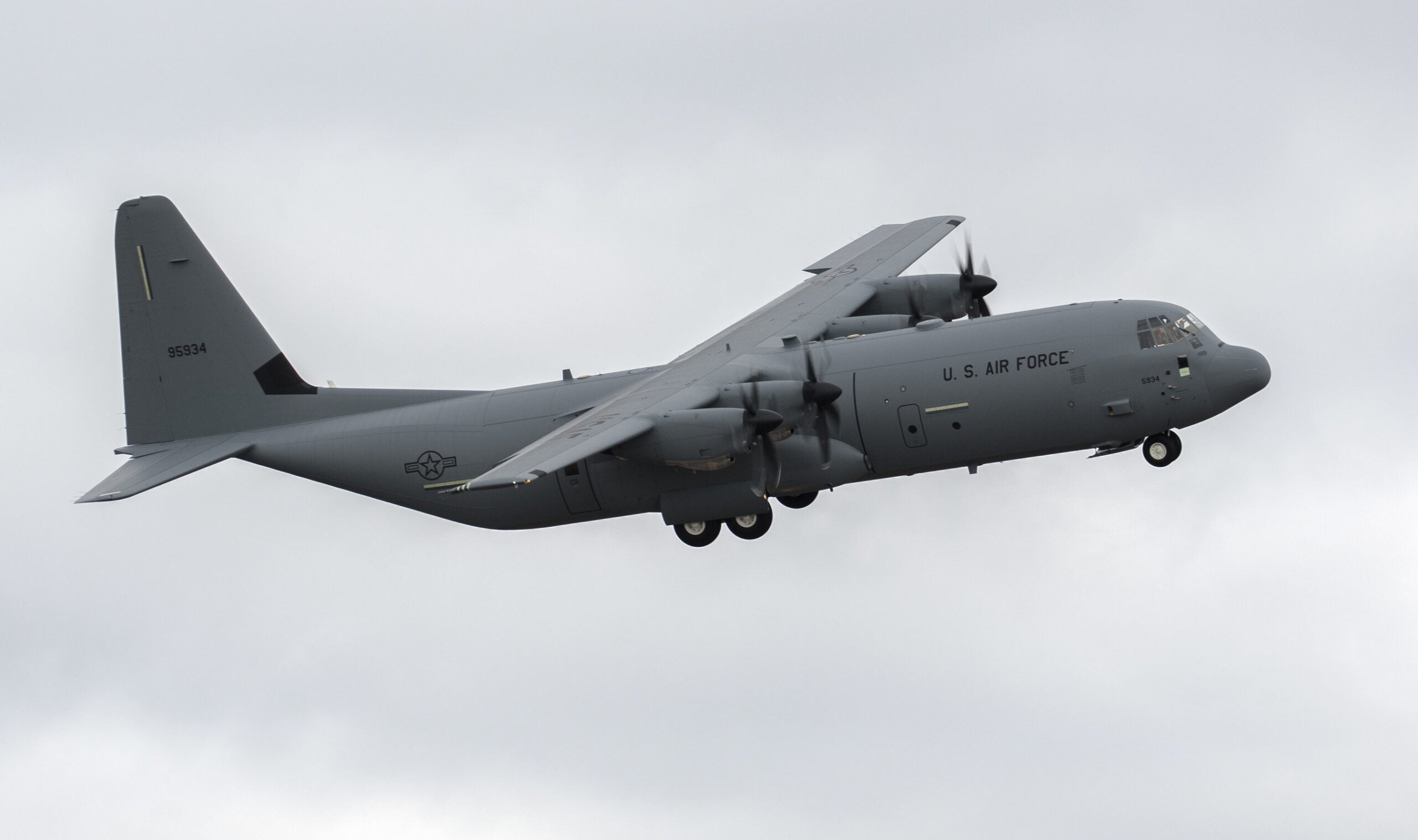
C-130A/B/E/H/J: Successive transport models with upgraded avionics and engines.

-
AC-130 Spectre/Ghostrider: Heavily armed gunship version for close air support.

-
KC-130: Aerial refueling variant used by the USMC.

-
LC-130: Ski-equipped version used in Arctic and Antarctic operations.

-
MC-130: Special operations variant used by U.S. Air Force Special Operations Command (AFSOC).

Modern Use and Legacy:
-
Still in Service (2025): More than 70 countries operate C-130s.
-
C-130J Super Hercules: Latest version with digital avionics, new engines (Rolls-Royce AE 2100), and improved performance.
-
Longevity: Over 2,500 units built; in service for 70+ years, making it one of the longest-running aircraft production lines ever.
Why It’s Historic:
-
Versatility: From war zones to humanitarian relief, the C-130 has proven itself in almost every mission imaginable.
-
STOL Capability: Operates from short, rough runways that jets cannot.
-
Global Reach: Used by over 70 nations, it’s a symbol of reliable military and humanitarian transport.
-
Combat Proven: Trusted in the most dangerous and demanding environments.
C-130 Hercules – Cockpit, Engine, and Sound Description
Cockpit
The cockpit of the C-130 Hercules is designed for functionality, durability, and mission effectiveness, especially in combat and tactical environments. It has evolved significantly over time, from the early analog layouts to the modern digital "glass" cockpits of the C-130J model.
Early Models (C-130A/E/H):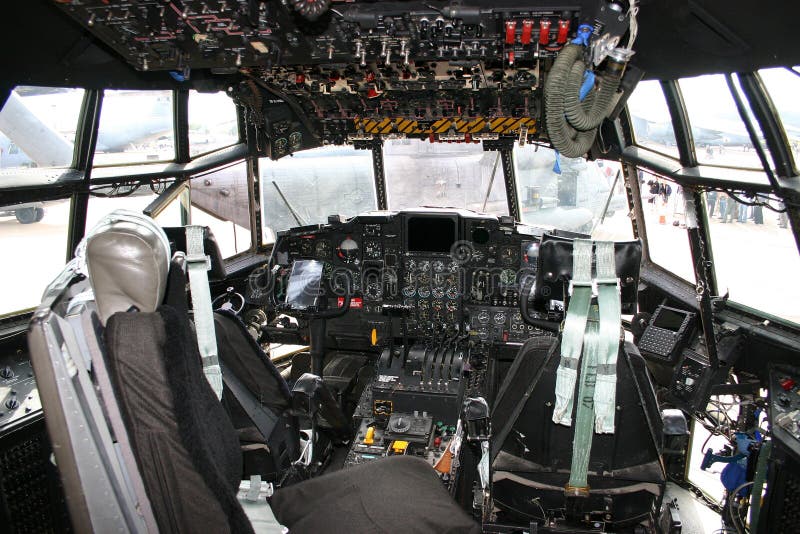
-
Configuration: Four-person crew in the cockpit—pilot, co-pilot, navigator, and flight engineer.
-
Instruments: Analog gauges for airspeed, altitude, attitude, navigation, engine performance, and fuel monitoring.
-
Flight Engineer Station: Located beside or behind the pilot seats, responsible for monitoring engines, fuel, hydraulics, and electrical systems.
-
Visibility: Large forward and side windows provide good visibility for low-level tactical flying and short-field landings.
-
Environment: Functional but spartan; built for utility, not comfort. Noise and vibration are constant factors during flight.
Modern C-130J Super Hercules: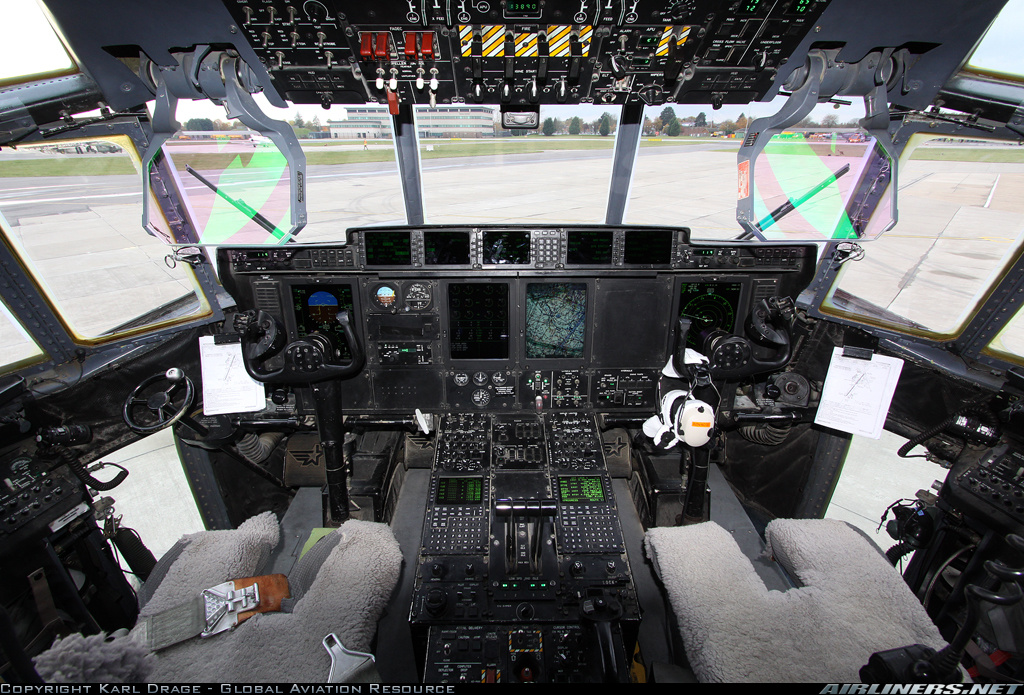
-
Crew Reduction: Flight engineer and navigator roles eliminated; two-person cockpit (pilot and co-pilot) with automation support.
-
Avionics: Full glass cockpit with digital multi-function displays (MFDs), GPS-integrated flight systems, and autopilot.
-
HUD (Head-Up Display): Projects critical flight data onto transparent screens in front of each pilot for enhanced situational awareness.
-
Night Vision Compatibility: Instrument lighting and displays are NVG-compatible for night operations.
-
Automation: Improved systems integration reduces workload and increases safety and mission capability.
Engines
The C-130 is powered by four turboprop engines, which provide the aircraft with a combination of high reliability, good fuel efficiency, and excellent short takeoff and landing (STOL) capability.
Original Versions:
-
Engine Type: Allison T56-A series turboprops.

-
Power Output: Approximately 4,590 to 5,000 shaft horsepower per engine, depending on the specific model.
-
Propellers: Four-blade constant-speed, variable-pitch propellers.
-
Performance Characteristics: Known for their durability and performance in rugged conditions. Capable of powering the aircraft from short or unprepared airstrips under heavy loads.
C-130J Super Hercules:
-
Engine Type: Rolls-Royce AE 2100D3 turboprops.
-
Power Output: Around 4,700 shaft horsepower per engine.
-
Propellers: Six-blade composite Dowty R391 propellers.
-
Advantages: Improved fuel efficiency, reduced maintenance requirements, quieter operation, and better climb and cruise performance compared to older models.
Sound
The sound of the C-130 Hercules is one of its most recognizable characteristics, both for those on the ground and those inside the aircraft.
External Sound:
-
The C-130 emits a loud, deep, and distinctive roar due to its turboprop engines.
-
The propeller tips often reach near-supersonic speeds at high RPMs, producing a buzzing or growling tone.
-
The sound carries over long distances and has a unique rhythm created by the four-engine layout. It’s often described as a steady “humming thunder” or a “low growl” that intensifies during takeoff.
-
In tactical flight, especially at low altitude, the aircraft produces a powerful presence—audibly and physically shaking the ground or structures nearby.
Internal Sound:
-
Inside older C-130s, the cockpit and cargo area are loud and filled with constant vibration.
-
Crews typically wear helmets or noise-canceling headsets to communicate and protect their hearing.
-
The sound is a combination of engine drone, propeller wash, and airflow noise, along with mechanical sounds from various onboard systems.
-
In the C-130J, noise levels are reduced thanks to improved insulation and more efficient propellers, but it remains significantly louder than most commercial aircraft.
Summary
| Feature | Description |
|---|---|
| Cockpit | Functional and rugged. Older models use analog instruments and require a four-person crew. Newer models like the C-130J use digital glass cockpits and require fewer crew. |
| Engines | Four turboprops (Allison T56 or Rolls-Royce AE 2100). Known for power, durability, and short-field performance. |
| Sound | Very loud and distinctive. Deep, droning roar from the engines and propellers, both externally and internally. Recognized by military personnel and aviation enthusiasts worldwide. |


No comments:
Post a Comment